
Preventive Protocols, Physiological Optimization, and Advanced Fall Mitigation in Aging Populations
Introduction
The clinical management of skeletal fragility and postural instability in aging cohorts has historically been dominated by reactive paradigms. Medical interventions frequently mobilize only following acute sentinel events, such as low-energy fragility fractures of the proximal femur, distal radius, or vertebral bodies. However, contemporary biogerontology and clinical orthopedics increasingly recognize that age-related bone mineral density loss and neuromuscular degradation represent continuous, multi-year pathologies. Transitioning from reactive trauma care to proactive physiological resilience requires a comprehensive examination of how micro-architectural bone deterioration, sarcopenic muscle atrophy, proprioceptive decline, and iatrogenic pharmaceutical burdens intersect long before clinical fracture thresholds are breached.
Effective fall mitigation cannot be achieved through isolated or fragmented interventions. Recommending physical loading protocols without addressing dietary mineral bioavailability or circulating systemic metabolic acidosis, for example, yields suboptimal skeletal adaptation. Similarly, aggressive pharmacological management of chronic conditions can inadvertently induce orthostatic hypotension or central nervous system sedation, which entirely neutralizes the functional benefits of physical conditioning. Therefore, establishing rigorous, evidence-based preventive protocols necessitates an integrated matrix that unifies nutritional biochemistry, targeted exercise physiology, and rigorous pharmaceutical surveillance. This treatise explores the biochemical, mechanical, and clinical imperatives required to optimize skeletal integrity and postural stability, serving as a publication-ready framework for academic review and advanced clinical translation.
Nutritional Biochemistry and Bone Mineralization: The Calcium-Protein-Matrix Triad
A pervasive misconception in public health messaging is that bone mineralization is a linear function of elemental calcium consumption. In clinical practice, simply saturating the gastrointestinal tract with calcium salts, such as calcium carbonate or calcium citrate, fails to guarantee skeletal incorporation and frequently introduces significant systemic hazards, including vascular calcification and nephrolithiasis. Skeletal structural integrity depends entirely on the synchronized orchestration of systemic co-factors that direct calcium into the extracellular organic matrix, known as osteoid, and facilitate its precise crystallization into hydroxyapatite.
Magnesium serves as a fundamental structural stabilizer for hydroxyapatite crystals, with approximately sixty percent of total body magnesium residing within the skeletal matrix. Biochemically, magnesium influences parathyroid hormone secretion and the enzymatic activation of vitamin D. A magnesium deficit results in cellular resistance to parathyroid hormone and impaired synthesis of 1,25-dihydroxyvitamin D, rendering calcium supplementation entirely ineffective. Furthermore, magnesium regulates crystal size; inadequate magnesium yields larger, more brittle hydroxyapatite crystals that fracture easily under mechanical stress.
Concurrently, vitamin D3, operating primarily as a secosteroid hormone, binds to intestinal vitamin D receptors to upregulate calbindin transport proteins, facilitating active transcellular calcium absorption. In bone tissue, active calcitriol maintains serum calcium and phosphate homeostasis by modulating osteoblastic and osteoclastic signaling pathways.
While vitamin D ensures adequate calcium absorption into the systemic circulation, vitamin K2, specifically in the form of menaquinone-7, is responsible for its precise spatial destination. Menaquinone-7 functions as an essential enzymatic cofactor for the carboxylation of osteocalcin, the primary non-collagenous protein synthesized by osteoblasts. Undercarboxylated osteocalcin floats passively in systemic circulation, whereas fully carboxylated osteocalcin binds calcium ions with high biochemical affinity and anchors them firmly into the bone matrix, preventing ectopic deposition in arterial walls and soft tissues.
Beyond mineral co-factors, sarcopenia—the age-related, involuntary loss of skeletal muscle mass, strength, and function—represents a primary driver of mechanical instability and fall susceptibility. Countering sarcopenia requires a sophisticated understanding of protein turnover dynamics and amino acid signaling pathways. Aging skeletal muscle exhibits a blunted hypertrophic response to hyperaminoacidemia and mechanical loading, a phenomenon clinically termed anabolic resistance. Consequently, older adults require higher per-meal protein doses to achieve the threshold of hyperaminoacidemia necessary to trigger muscle protein synthesis.
The branched-chain amino acid leucine serves as a vital intracellular signal, binding to cytosolic sensors that activate the mechanistic target of rapamycin complex 1, which acts as the master regulator of protein translation initiation. To overcome anabolic resistance, clinical nutritional protocols must ensure sufficient per-meal concentrations of leucine sourced from high-biological-value proteins. For individuals adhering to plant-based diets, meeting essential amino acid requirements involves strategic food combining to ensure a complete amino acid profile, offering the distinct clinical advantage of generating lower renal acid loads compared to sulfur-rich animal proteins.
Human blood pH is tightly regulated between strict physiological parameters. When modern dietary patterns introduce a high renal net acid excretion load—characterized by an abundance of acid-ash precursors relative to alkaline-ash precursors—the body must deploy rapid buffering mechanisms to prevent fatal acidemia. Bone tissue acts as an enormous alkaline mineral reserve. In the presence of chronic, low-grade metabolic acidosis, physicochemical and cellular mechanisms dissolve bone mineral, releasing calcium carbonate and alkaline salts into the serum to neutralize excess hydrogen ions. This lifelong buffering trade-off sacrifices structural bone mineral density to maintain immediate acid-base homeostasis. Incorporating large quantities of potassium-rich, alkalizing plant foods neutralizes metabolic acids in vivo, sparing skeletal calcium and preserving trabecular micro-architecture without pharmacological intervention.
Targeted Exercise Physiology and Mechanical Loading
Bone is a remarkably dynamic, mechanosensitive organ. Wolff’s Law dictates that bone remodels in direct response to the mechanical forces placed upon it, an adaptation executed via mechanotransduction, the cellular process by which physical forces are converted into biochemical signals. Osteocytes, the most abundant cells in mature bone, are embedded within the mineralized matrix and connected via a dense network of dendritic processes running through canaliculi. When physical loads deform bone tissue, fluid within the canaliculi is displaced, generating fluid shear stress across the osteocytic cell membranes.
This fluid shear stress stimulates osteocytes to downregulate sclerostin, which is a potent inhibitor of the Wnt/beta-catenin signaling pathway that normally suppresses bone formation, while simultaneously Upregulating insulin-like growth factor 1 and prostaglandin E2. This biochemical cascade signals local osteoblasts to lay down new osteoid matrix, reinforcing areas subjected to mechanical strain. Low-impact, static stretching is entirely insufficient to trigger robust mechanotransduction. Optimal osteogenic loading requires high-magnitude, high-frequency, or unpredictable mechanical strains, such as brisk walking on varied terrain, weighted vest protocols, or targeted resistance training, that maximize interstitial fluid flow within the bone matrix.
Falls, however, rarely occur because an individual lacks absolute static muscle strength; rather, they occur because the central and peripheral nervous systems fail to execute rapid, corrective motor adjustments during a micro-slip or trip. Aging is accompanied by a natural loss of cutaneous mechanoreceptors in the soles of the feet and muscle spindles within the lower extremities, severely impairing joint position sense. Neuromuscular re-education protocols must actively challenge the somatosensory, vestibular, and visual systems simultaneously. Single-limb stance variations, heel-to-toe gait drills, and unstable surface training force the central nervous system to recalibrate motor unit recruitment patterns.
Because real-world falls often happen when an individual is cognitively distracted while navigating complex environments, clinical balance protocols should integrate dual-task cognitive paradigms, such as serial subtraction or verbal fluency exercises, during motor tasks to train executive attentional control over gait stability. The physiological cost of physical inactivity is both steep and rapid, precipitating disuse osteoporosis, selective accelerated atrophy of fast-twitch Type II muscle fibers responsible for explosive corrective movements, and diminished cardiac stroke volume leading to orthostatic intolerance. Establishing consistent daily movement patterns ensures a baseline of continuous mechanical and metabolic stimulation across all musculoskeletal tissues.
Pharmacological Vigilance and Iatrogenic Risk Mitigation
In older adult populations, multi-drug regimens are exceptionally common. However, polypharmacy frequently introduces iatrogenic fall risks that entirely overpower physical conditioning and nutritional improvements. Certain pharmacological classes directly impair sensorimotor function, balance, and blood pressure regulation. Sedative-hypnotics, including benzodiazepines and non-benzodiazepine receptor agonists, induce central nervous system depression, cognitive blunting, prolonged reaction times, and persistent morning hangover effects. Anticholinergic medications cause blurred vision, cognitive confusion, psychomotor slowing, and acute delirium.
Antihypertensive agents, such as diuretics, beta-blockers, and angiotensin-converting enzyme inhibitors, frequently provoke orthostatic hypotension, characterized by sharp systolic blood pressure drops upon standing, dizziness, and syncope. Psychotropic agents, including antipsychotics and selective serotonin reuptake inhibitors, induce extrapyramidal symptoms, ataxia, sedation, and severe postural instability.
Beyond systemic drug effects, clinicians and patients must account for localized pathological shifts that compromise spatial orientation. Peripheral neuropathies, frequently secondary to metabolic dysregulation or nutritional deficiencies such as vitamin B12 malabsorption, deaden tactile feedback from the lower extremities. Visual field deficits, including cataracts, glaucoma, and macular degeneration, diminish edge-contrast sensitivity, making level changes such as steps, curbs, or transition zones between flooring materials difficult to perceive.
Vestibular disorders, such as benign paroxysmal positional vertigo and age-related otolith degradation, misinform the central nervous system regarding head orientation in space, provoking sudden spatial disorientation. Establishing a formal framework for periodic medication reviews, such as utilizing explicit screening criteria for potentially inappropriate medication use in older adults, represents an essential clinical safeguard. Deprescribing, defined as the supervised, intentional reduction or cessation of medications where potential harms outweigh clinical benefits, directly correlates with measurable reductions in fall incidence and emergency department admissions.
Anthropometric Recalibration: Adiposity, Center of Gravity, and Postural Equilibrium
The biomechanics of fall mitigation are profoundly influenced by anthropometric variables, specifically the accumulation and physical distribution of adipose tissue. Central or abdominal adiposity structurally displaces the human body’s center of mass anteriorly. This persistent anterior shift continuously challenges static and dynamic postural equilibrium, necessitating constant, compensatory mechanical torque at the lumbar spine, hip, and ankle joints to prevent forward collapse. Consequently, individuals with elevated body mass indices inherently exhibit increased anterior-posterior postural sway and diminished absolute limits of stability.
When the center of gravity is misaligned due to excessive visceral tissue, the neuromuscular threshold required to recover from a micro-slip is significantly heightened, often exceeding the reactive capacity of sarcopenic muscle groups. Strategic weight reduction—when strictly coupled with the aforementioned leucine-rich nutritional protocols and mechanical loading to prevent concurrent lean mass atrophy—serves as a primary biophysical intervention. By recalibrating the center of gravity toward its optimal physiological axis over the base of support, targeted fat mass reduction directly decreases the baseline neuromuscular demand required for upright locomotion. This structural recalibration restores mechanical efficiency to the gait cycle and significantly reduces the probability of forward-falling trajectories during sudden locomotor perturbations.

Biomechanical Load Management and Cognitive Pragmatism
Beyond internal anthropometrics, the acute external loads an individual chooses to physically manipulate critically dictate dynamic stability. The act of carrying heavy, bulky, or asymmetrical objects profoundly alters the body’s center of gravity while simultaneously obscuring the visual scanning of the lower extremities and immediate ground surfaces. In aging populations, the neuromuscular reserves required to counter sudden inertial shifts while carrying excessive, unstable cargo are frequently compromised. When an individual’s visual field is blocked by carried objects, the reliance on degrading proprioceptive and vestibular feedback loops is dangerously magnified, frequently resulting in catastrophic encounters with unrecognized environmental hazards such as uneven pavement or unseen stairs.
Therefore, physical risk mitigation necessitates a cognitive reframing of daily functional tasks, emphasizing realistic load management over the rapid, consolidated execution of chores. Patients must be counseled to critically evaluate their carrying capacity and strictly avoid the biomechanical overload inherent in transporting excessive household goods, groceries, or awkward parcels in a single attempt. This principle of strategic mechanical conservation is elegantly encapsulated by the pragmatic cultural maxim popularized by the American writer and comedian Larry David, who emphatically advocates for individuals to “take two trips” rather than attempting to transport an unmanageable volume of goods simultaneously. Adopting this philosophy of task fractionation effectively neutralizes the acute biomechanical hazards associated with overloading, prioritizing base-of-support integrity, visual field clearance, and postural safety over temporal efficiency.
Low-Risk Neuromuscular and Balance Protocols for Older Populations
While advanced balance re-education is essential for mitigating fall risks, conventional dynamic routines (such as unassisted tandem walking or single-limb standing on unstable balance discs) can introduce an unacceptable immediate hazard of trauma for individuals with advanced proprioceptive deficits or severe sarcopenia. Consequently, clinical exercise physiology emphasizes lower-risk, highly supported neuromuscular training modalities that challenge the somatosensory and vestibular systems while providing immediate mechanical safeguards against structural falls.
Supported Proprioceptive Loading and Sit-to-Stand Mechanics
A foundational, low-risk movement pattern is the controlled, repetitive sit-to-stand (box squat) protocol utilizing a firm, high-surface chair with stable armrests. Biochemically and biomechanically, this movement engages the extensor muscle chains of the lower extremities—specifically the gluteus maximus, quadriceps femoris, and gastrocnemius—without exposing the patient to lateral destabilization.
- Execution and Progression: By focusing on eccentric deceleration during the descent phase and explosive concentric drive during the ascent, patients stimulate type II muscle fiber recruitment and joint mechanoreceptors.
- Safety Matrix: The presence of stable armrests or a wall-mounted support bar allows the individual to self-limit loading and instantly arrest any loss of balance, effectively eliminating the risk of uncontrolled tipping.
Semi-Tandem and Wall-Supported Static Postural Holds
Progressive static stability training should be executed within a corner or against a smooth wall, allowing the patient’s torso or fingertips to maintain light somatosensory contact with vertical reference planes.
- The Semi-Tandem Stance: Rather than requiring a strict heel-to-toe alignment (which severely narrows the base of support and challenges fragile vestibular loops), the semi-tandem position places the heel of one foot instep against the large toe of the opposite foot. This configuration moderates the challenge to the base of support.
- Sensory Integration: Limiting visual input (such as gentle head-turns or closing eyes briefly while maintaining fingertip wall contact) forces the central nervous system to upregulate vestibular and proprioceptive feedback without risking a catastrophic fall.
Low-Velocity Aquatic and Closed-Chain Resistance Dynamics
Water-based immersion environments offer a distinct biophysical advantage for geriatric balance training. Hydrostatic pressure and water density provide natural drag and gentle multidirectional resistance while significantly reducing gravitational loading on compromised vertebral bodies and articular cartilage.
- Buoyancy Assistance: Aquatic stepping exercises, water-based weight-shifting drills, and shallow-water heel-to-toe progressions allow older adults to execute wide-amplitude motor patterns at reduced velocities.
- Neuromuscular Safety: The higher viscosity of water delays the velocity of a potential slip, providing the central nervous system with extended reaction windows to execute corrective motor adjustments safely.
The Therapeutic Geriatric Massage Adjunctive Health Modality: Physiological and Neuromuscular Implications
Within the framework of clinical gerontology and postural stability, soft-tissue manipulation therapies can be evaluated through an objective, mechanistic lens regarding their influence on neuromuscular signaling, autonomic regulation, and biomechanical compliance. Rather than acting as a passive or superficial intervention, clinical manual therapy exerts measurable physiological effects on the mechanoreceptor network embedded within skeletal muscle, fascia, and joint capsules.Age-related degradation of postural control is heavily mediated by alterations in the sensitivity of muscle spindles and Golgi tendon organs, which together compromise joint position sense and afferent feedback loops to the central nervous system.
Controlled mechanical compression and stretching of soft tissues stimulate cutaneous and deep mechanoreceptors, transiently modulating alpha-motor neuron excitability and reducing hypertonic muscle guarding surrounding arthritic or compromised joints.Investigations into the acute physiological outcomes of structured, full-body therapeutic soft-tissue protocols indicate notable shifts in autonomic and spinal reflex parameters. Specifically, randomized and controlled trials assessing postural sway metrics have demonstrated that manual mechanical input can significantly reduce rectangular displacement area and center-of-pressure velocity during static and functional balance assessments.
Furthermore, neurophysiological evaluations utilizing Hoffmann-reflex testing have observed statistically significant modulations in the Hmax/Mmax ratio following treatment, pointing toward a temporary attenuation of spinal motor pool excitability that correlates with enhanced postural stability. Concurrently, hemodynamic adjustments—such as reductions in systolic and diastolic blood pressure paired with modulated autonomic tone—indicate that manual soft-tissue manipulation can influence systemic vascular resistance, though these localized and systemic responses remain largely acute and transient.Consequently, while therapeutic massage cannot replace active mechanical loading or progressive resistance training for osteogenesis and sarcopenia reversal, it operates as an ancillary clinical modality capable of transiently mitigating myofascial restrictions, improving joint range of motion, and modifying peripheral sensory inputs to support integrated fall-mitigation frameworks.
Environmental Biomechanics and Homeostasis
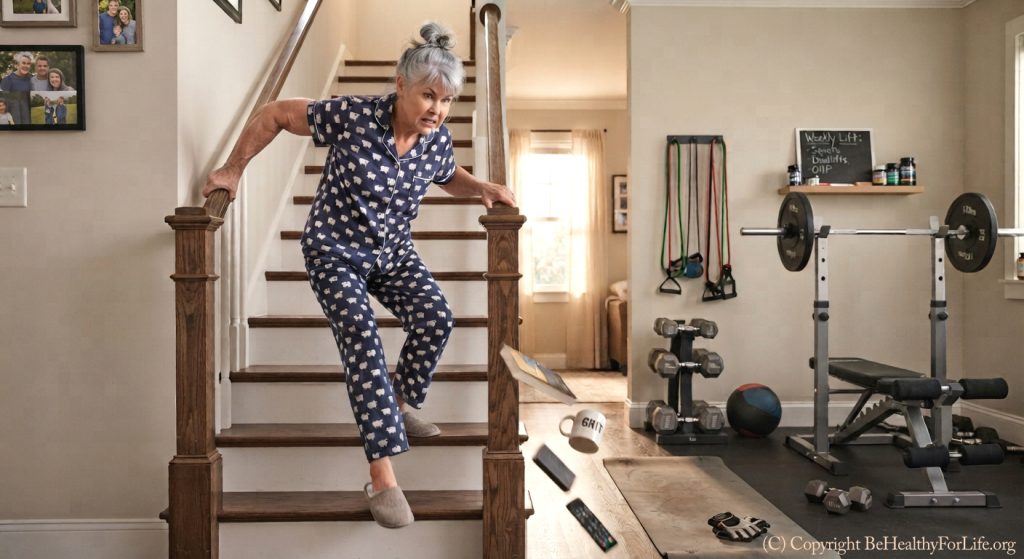
While internal physiological resilience forms the primary defense against injury, the immediate physical environment dictates mechanical hazard exposure. Environmental modifications should focus on optimizing uninhibited, fluid movement rather than imposing restrictive, fear-driven spatial confinement. Age-related pupillary miosis significantly reduces retinal illuminance. Mitigating environmental fall risk requires high-lumen, glare-free architectural lighting, particularly along stairwells and transitional hallways. Furthermore, painting doorframes and stair edges with high-contrast visual markers compensates for declining depth and contrast perception.
Eliminating loose rugs, securing electrical cords, and smoothing uneven flooring thresholds removes mechanical snag points that catch low-clearance gait patterns. Installing grab bars and handrails in high-risk zones, such as bathrooms and stairwells, provides passive mechanical backup without obstructing active motor engagement. The selection of assistive devices, such as canes and rolling walkers, must balance structural support with the psychological preservation of patient autonomy. Improperly fitted or unprescribed assistive devices can alter biomechanical gait symmetry, increase upper-extremity loading, and discourage core stabilizing musculature. Clinical gait analysis ensures that any mechanical aid preserves natural proprioceptive feedback loops while preventing catastrophic loading events.
Domestic Environmental Ergonomics: Surface Integrity, Flooring, and Chemical Hazards
While internal physiological resilience and load management form the primary biological defenses against trauma, the immediate domestic environment frequently introduces environmental hazards that can precipitate acute falls. Older adults living in residential settings must systematically audit their physical surroundings to eliminate micro-environmental trip hazards and slick surfaces that challenge stability.
- Carpeting and Stairway Security: Wall-to-wall carpeting must be entirely snug, taut, and free of ripples or loose edges that can easily catch low-clearance gait patterns. Area rugs should be completely avoided unless secured with industrial non-slip backing. Staircases represent a zone of exceptionally high mechanical risk; carpets installed on stairs must be firmly anchored at every nosing and tread to prevent foot snagging during descent. Furthermore, replacing worn carpeting with high-traction, finished wood or rubberized treads coupled with continuous handrails significantly increases mechanical safety.
- Surface Friction and Cleaning Agents: The chemical management of domestic flooring is equally critical. The application of high-gloss floor waxes, lipid-based polishes, or overly slippery cleaning detergents leaves microscopic residual films that drastically reduce the coefficient of friction between footwear and the walking surface. Domestic cleaning protocols must exclusively utilize non-skid, residue-free surfactant cleaners, ensuring that wet-mooped or freshly scrubbed walking paths are fully dried before being traversed to prevent unexpected forward or lateral slips.
Synthesis and Conclusions
Preventing falls and preserving skeletal integrity cannot be reduced to a single biological target. True mitigation requires the synchronous integration of biochemical optimization through magnesium, vitamin D3, vitamin K2, and systemic acid-base buffering; skeletal preservation via overcoming anabolic resistance and stimulating osteoblastic remodeling through mechanotransduction; neuromuscular enhancement through progressive balance, proprioceptive, and dual-task motor training; and iatrogenic elimination via rigorous auditing of pharmacological regimens.
By bridging cellular biology, clinical pharmacology, and public health translation, this framework offers a rigorous blueprint for educated readers, researchers, and clinicians alike. Moving past the simplistic mandates of the past, this approach champions physiological empowerment, transforming how aging populations interact with their environment, their nutrition, and their own somatic potential.
Peer-reviewed, open-access references corresponding directly to the core scientific concepts explored in the manuscript. You can visit these entries on PubMed Central to review the foundational literature:
1. Amino Acid Sensing, Leucine Thresholds, and Sarcopenia
- Reference: Drummond, M. J., et al. (2016). Amino Acid Sensing in Skeletal Muscle. Current Opinion in Clinical Nutrition and Metabolic Care / PubMed Central.
- Focus: Examines the mechanics of anabolic resistance in aging muscle tissue, leucine sensing pathways, and the mechanistic target of rapamycin complex 1 (mTORC1) activation thresholds.
- Link / Repository: PMC5075248 on NIH/PubMed Central
2. Vitamin K2, Osteocalcin Carboxylation, and Hydroxyapatite Binding
- Reference: Maresz, K. (2015). Proper Calcium Use: Vitamin K2 as a Promoter of Bone and Cardiovascular Health. Integrative Medicine (Encinitas) / PubMed Central.
- Focus: Details the role of menaquinone-7 (vitamin K2) in carboxylating osteocalcin, directing calcium deposition into the skeletal hydroxyapatite matrix, and preventing ectopic soft-tissue and vascular calcification.
- Link / Repository: PMC4566462 on NIH/PubMed Central
3. Dietary Acid Load, Renal Net Acid Excretion, and Bone Mineral Density
- Reference: Kok, D. E., et al. (2017). Dietary acid load, trabecular bone integrity, and mineral density in an ageing population: the Rotterdam Study. Osteoporosis International / PubMed Central.
- Focus: Evaluates how renal net acid excretion (RNAE) and dietary acid-base variations relate to long-term trabecular bone micro-architecture and bone mineral density preservation in older cohorts.
- Link / Repository: PMC5524850 on NIH/PubMed Central
4. Fluid Shear Stress and Mechanotransduction in Bone Remodeling
- Reference: Wittkowske, C., et al. (2016). Flow-induced mechanotransduction in skeletal cells. Biomedical Engineering Online / PubMed Central.
- Focus: Explicates the biophysical mechanisms of interstitial fluid flow through canaliculi, osteocytic mechanosensation, sclerostin downregulation, and downstream osteoblastic activation.
- Link / Repository: PMC6815304 on NIH/PubMed Central
5. Six Weeks of Massage Therapy Produces Changes in Balance, Neurological and Cardiovascular Measures in Older Persons
Sefton, J. M., Yarar, C., & Berry, J. W. (2012). Six weeks of massage therapy produces changes in balance, neurological and cardiovascular measures in older persons. International Journal of Therapeutic Massage & Bodywork, 5(3), 3–15. https://doi.org/10.3822/ijtmb.v5i3.181 Cited by: 27
6. Home-based strength and balance exercises for fall prevention among older individuals of advanced age: a randomized controlled single-blind study
Zhou, J., Liu, B., Xu, J., Wang, F., Ye, H., Duan, J., & Cui, X. (2025). Home-based strength and balance exercises for fall prevention among older individuals of advanced age: a randomized controlled single-blind study. Annals of Medicine, 57(1), 2459818. https://doi.org/10.1080/07853890.2025.2459818 Cited by: 25
7. Body weight is a strong predictor of postural stability
Hue, O., Simoneau, M., Marcotte, J., Berrigan, F., Doré, J., Marceau, P., Marceau, S., Tremblay, A., & Teasdale, N. (2007). Body weight is a strong predictor of postural stability. Gait & Posture, 26(1), 32–38. https://doi.org/10.1016/j.gaitpost.2006.07.005
8. Curb Your Enthusiasm
David, L. (Creator). (2000–2024). Curb Your Enthusiasm [Television series]. HBO Entertainment. (Referencing the overarching comedic philosophy of functional pragmatism and spatial awareness in everyday tasks).
This is an Observational or descriptive Pre-Print study; these sorts of studies (such as cross-sectional, ecological, or cohort studies that observe phenomena without active experimental intervention), as distinguished from investigational or interventional studies (such as randomized controlled trials where researchers actively manipulate a variable, like administering a specific supplement or exercise protocol).
9. Environmental assessments and modifications to prevent falls in older people.
Clemson, L., Mackenzie, L., Ball, K., Close, J. C., & Cumming, R. G. (2008). Environmental assessments and modifications to prevent falls in older people. Journal of the American Geriatrics Society, 56(3), 509–516. https://doi.org/10.1111/j.1532-5415.2007.01579.x
