
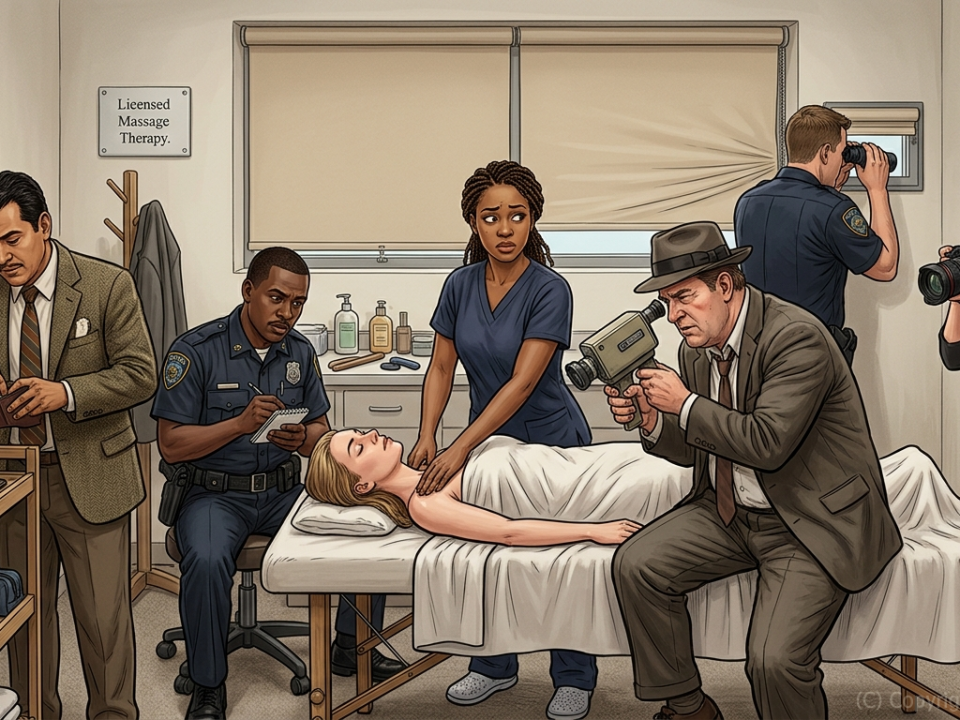
Touch As Healing Has Historical Precedent in Nearly Every World Culture
The human skin is not merely a biological envelope; it is the body’s largest sensory organ and a primary interface for neurological, immunological, and psychological homeostasis. Throughout human history, the application of “structured touch” has been recognized as a foundational healing modality.
However, in the State of New Jersey, the legislative evolution of the past two decades has effected a systematic “colonization” of this somatic space. By redefining the universal act of human touch through the lens of “Police Power” and “Bad Actor” surveillance, the state has effectively traded a respected medical modality for a regulatory weapon, resulting in a profound infantilization of the Licensed Massage Therapist (LMT) and a disruption of parental and patient autonomy.
These laws serve to “catch people,” rather than provide a safe framework for a complementary medical modality that has growing research behind it gathering by the year, now with great momentum.
This has roots in bias against women, as well as members of the lower socioeconomic strata. And, those are the primary groups affected adversely by these rules, as well.
I. The Biological Necessity and Clinical Legitimacy of Touch
To understand the gravity of regulatory overreach, one must first acknowledge the empirical necessity of touch. Clinical research has consistently demonstrated that human touch is a biological imperative. Studies on “Touch Deprivation” (Field, 2010) indicate that a lack of tactile stimulation leads to increased cortisol levels, weakened immune response, and heightened anxiety. Conversely, the “structured touch” employed by LMTs triggers a cascade of beneficial biochemical reactions, including the release of oxytocin and the modulation of the parasympathetic nervous system.
In a functional medical model, the LMT operates as an expert in Somatic Assessment. This is not merely “relaxation”; it is a clinical process involving the evaluation of soft tissue integrity, range of motion, and myofascial triggers. A professional LMT generates clinical notes and assessments that are increasingly recognized by insurance carriers and interdisciplinary medical teams as essential data points for patient recovery. Despite this, the legislative framework in New Jersey treats the LMT not as a primary care partner, but as a potential liability to be mitigated.
II. The 2007 Act: From Professional Standard to Surveillance Tool
The transition from the 1999 Title Protection Act (P.L. 1999, c. 19) to the Massage and Bodywork Therapist Registration Act of 2007 (P.L. 2007, c. 337) marked a tectonic shift in the State’s logic. Under the original 1999 law, the State protected the title of the professional. The 2007 Act, however, transitioned to a Practice Act, which claimed jurisdiction over the act itself.
By defining “massage and bodywork therapy” as any “systems of activity of structured touch” (N.J.S.A. 45:11-55), the State effectively nationalized the human shoulder. The intent behind this broad definition was not to refine the clinical standards of the modality, but to simplify “Police Power.” By making the physical act of touching a licensed event, law enforcement gained a “deterministic hook” to shut down illicit storefronts without having to prove specific criminal intent.
Critically, the statutory inclusion of “static holding” within the definition of massage therapy serves as the ultimate regulatory dragnet. By codifying “static holding” as a professional medical act, the State ensures that any touch—no matter how stationary, non-mechanical, or energetic—is captured under its jurisdiction. This effectively eliminates the “Human Exception.” In the eyes of the Board, there is no such thing as a non-clinical touch in a professional setting; a hand resting motionless on a shoulder is legally indistinguishable from a complex myofascial release, thereby completing the State’s total colonization of the somatic space.
III. The Custodial Cage: The Infantilization of Pediatric Care
The most egregious manifestation of this distrust is found in N.J.A.C. 13:37A-3.6(h), which mandates that a licensee shall not provide services to a minor unless a parent or legal guardian is physically present in the treatment room.
This regulation creates a profound “Professional Double Standard.” Occupational Therapists (OTs) and Physical Therapists (PTs) are trusted to exercise clinical judgment and maintain professional boundaries with pediatric clients without a mandated chaperone. The LMT, however, is infantilized—treated as a professional incapable of being trusted in a private clinical setting. This mandate creates several critical “Friction Points” in modern pediatric care:
- The Hospice and Home Health Barrier: Children in palliative care or receiving home-based therapy for chronic conditions are often denied access to the benefits of touch if a parent is unable to be physically present. Even if a certified Home Health Aide or a trusted relative is on-site, the LMT is legally paralyzed.
- The “Working Parent” Tax: The “Parent-in-the-Room” mandate is not a neutral safety rule; it is a socio-economic barrier. For working-class families, single parents, or those living in “Touch Deserts,” this mandate acts as a regressive tax. If a parent must choose between working a shift to provide for the family and attending a child’s therapeutic session, the child inevitably loses access to care.
- The Digital Transparency Paradox: In many modern clinical settings, parents prefer the “Deterministic Safety” of high-definition camera monitoring. This allows the child to develop a sense of personal agency and privacy during therapy while providing the parent with complete oversight. The NJ Board’s rejection of this alternative highlights that the law is not about modern safety, but about archaic physical surveillance.
IV. The Anatomical Paradox and the Maternal Health Gap
The infantilization of the LMT is further visible in the arbitrary “Anatomical Walls” erected by the State, which ignore clinical indications in favor of moralistic profiling. While New Jersey law allows for the evolution of a practitioner’s skill set through new modalities, it maintains a nonsensical restriction on intravaginal massage.
Under current regulations, an LMT is trusted to perform intraoral work for TMJ dysfunction, intranasal work, and even intra-anal clinical applications (such as coccyx alignment or pelvic floor release). However, intravaginal work remains strictly prohibited. This creates a devastating gap in Postpartum Therapy. For a postnatal patient suffering from scar tissue adhesions or birth-related trauma, the LMT—the professional most trained in soft-tissue mobilization—is legally barred from providing the most effective manual intervention. The State trusts the LMT to navigate the cranium and the rectum but withdraws that trust at the vaginal vestibule, prioritizing “moral optics” over maternal clinical necessity.
Of course, Physical Therapists and other Health Professionals providing Pelvic Floor Therapy must take additional post-graduate continuing education modules in order to learn this modality, and be able to practice PF PT.
Why shouldn’t an LMT be able to take such courses and practice what is taught? In reality, Pelvic Floor Care includes a great deal more than intra-vaginal work, and isn’t even always indicated. And so, an LMT can definitely help with Pelvic Floor issues, by working externally only, but cannot provide any help that requires intra-vaginal work. That is not to say an LMT cannot provide competent, helpful care in terms of Pelvic Floor Therapy. However, there is that limitation.
V. Why Are LMTs Singled Out on This Point?
Why is it that one particular type of Licensed Health Care Professional, the Massage Therapist, a professional role which focusing strictly on soft tissue, be limited in this manner, while other Health Care Professionals, whose roles may include working with soft tissue, but not exclusively, are not bound by this arbitrary prohibition on intra-vaginal work? Why should Scope of Practice be limited in this way for an LMT?
The answer is clear: These other Health Care Providers like Physical Therapists and Occupational Therapists are not being pre-crime profiled for prostitution and providing illicit sexual services. There is just no other answer. The law was written to serve this very purpose. Of course, the idea of fighting prostitution was a good one; it’s just the implementation phase we’re concerned with here, which relies on over-broad definitions.
However, the law doesn’t create a “carve-out” for therapeutic intent. It views the location of the touch, solely. By tethering the LMT license so closely to the “prevention of prostitution,” the state essentially tells the practitioner: “If you touch these areas, even for a postpartum medical reason, you are legally indistinguishable from an illicit actor.”
Weird, no?
VI. It was About Penises, Not Vaginas, All Along!
While the law does state that the Licensed Massage Therapist cannot do any intra-vaginal work, that means that absolutely no touch therapy may be performed at all, as they’ve also included static holding, essentially meaning any form of touch, as falling under the category of “Massage.”
Any form of touch an LMT might provide for a woman’s vagina would be unhealthy, sexualized, illegal, and immoral touch. OK; got that. There is not really room for anything else in the law.
However, the word “penis” is also mentions in the law. And here we find the real purpose of all this. LMTs cannot perform sexual services. And, really, we’re talking about men.
Let’s be real, folks:
Women are not out there seeking sexual services at the local “Rub Spot.” All of those seedy “Massage Parlors” out there are serving men, exclusively.
The people writing this law were just being egalitarian and fair by including women’s vaginas.
VII. Industry Demographics: The Sex Workers
Research into the thousands of Illicit Massage Businesses (IMBs) across the U.S. shows a stark gender and age divide for those working inside these establishments. These are the places that have “Spa” signage but blacked-out windows.
-
Gender: The vast majority of workers in IMBs are women. Reports from the Polaris Project and the Human Trafficking Institute indicate that these victims are predominantly female foreign nationals. The percentage of men identified as trafficking victims in the “Illicit Massage, Health, & Beauty” sector is extremely low, generally estimated at less than 5%.
-
Age: Unlike traditional street-based sex work, women in IMBs are often older, typically between 30 and 55 years old.
Women are being profiled as “Johns,” essentially, if they are seeking intra-vaginal work from an LMT. And, the LMT is framed as a sex worker, if they even touch the vagina.
An entire class of people, namely females, one half of the population, is being caught in a dragnet-style law designed to stop prostitution, human trafficking,m and illegal activity.
XIII. Why the Law Labels the Patient a “John” (De Facto)
When a law is designed solely to stop “Johns” and “Prostitutes,” every interaction is forced into that binary.
-
The Practitioner’s Risk: If an LMT provides legitimate, intravaginal myofascial release to a postnatal mother, they risk being charged with practicing outside of scope or, worse, criminal sexual contact.
-
The Patient’s Status: Under this rigid legal framework, a woman seeking help for a legitimate medical condition is technically “soliciting” an act that the state has deemed “non-therapeutic” for your specific license. If she asks for help intra-vaginailly, under the law as it’s written, she is now a “John.”
IX. The Resulting Professional Crisis
This is a massive barrier for the Perinatal LMT. It forces a “medicalization” of the female body where only a Physical Therapist (PT) or Doctor is “trusted” to remain professional.
-
Discrimination against the LMT: It implies that an LMT is incapable of maintaining clinical boundaries in the pelvic region, whereas a PT is.
-
Impact on the Mother: A mother in pain is forced to navigate a more expensive, often harder-to-access medical system (PT) because the law assumes her request for “massage” in that area is inherently illicit.
X. The Marital Policing Trap: The Codification of Spousal Intimacy
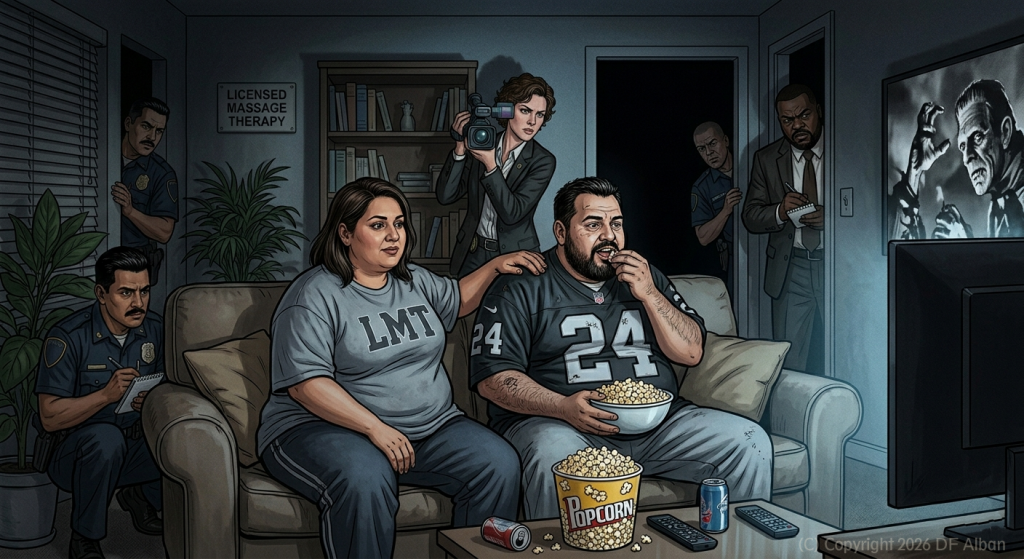
The most extreme example of the 2007 Act’s “Police Power” overreach is found in the historical and current attempts to regulate the private, consensual lives of practitioners. In the September 4, 2012, Supplement of the N.J.A.C. 13:37A, the Board revealed a logic so invasive that it effectively placed the State as a chaperone in the marital bedroom. While this language has since been redacted, it served to further support the thesis presented here.
The State attempted to quantify the legitimacy of human affection through a chronological lens, defining a “long-term committed relationship” by a specific marker:
“For purposes of this definition, a long-term committed relationship means a relationship that is at least six months in duration.” (N.J.A.C. 13:37A-3.5, Supp. 9-4-12)
This “Six-Month Rule” meant a therapist in a committed relationship of five months was technically in violation of sexual misconduct statutes if they provided therapeutic touch followed by intimacy. Furthermore, the “Spousal Exception” in N.J.A.C. 13:37A-3.5(j) contained a clause that infantilized the very nature of marriage:
“Nothing in this section shall be construed to prevent a licensee from rendering massage or bodywork therapy to a spouse, providing that… the performance of therapy is not utilized to exploit the spouse for the sexual arousal or sexual gratification of the licensee.”
This creates a Clinical Audit of the Marital Bed. It suggests that if an LMT feels a natural attraction to their spouse during a moment of physical care, they are “exploiting” that spouse. It criminalizes the natural biological response between committed adults and turns the private bedroom into a potential site of regulatory investigation.
XI. The Clinical Audit of the Marital Bed: Regulating the “Standards” of Intimacy
The most invasive “Deterministic Logic Gate” ever constructed by the New Jersey State Board is codified in the specific language of N.J.A.C. 13:37A-3.5(j). While the clause is framed as an “exception” that allows a licensee to touch their spouse, the conditions attached to that exception represent a profound “Micro-Colonization” of private life. The State mandates that such touch is only legal if:
“…the rendering of such massage or bodywork therapy is consistent with accepted standards of massage or bodywork therapy and that the performance of therapy is not utilized to exploit the spouse for the sexual arousal or sexual gratification of the licensee.”
This language is “sick” precisely because it attempts to sanitize and clinicalize the biological reality of human marriage. It creates a three-fold pathology of state overreach:
- The De-Humanization of Spousal Connection: By requiring that a backrub given to a husband or wife be “consistent with accepted standards,” the State essentially outlaws the “Human Touch.” It demands that a wife massaging her husband must maintain the same clinical distance, draping standards, and technical protocols as if she were treating a stranger in a clinic. It strips the gesture of its spontaneity and replaces it with a State-Mandated Procedure.
- The “Exploitation” Paradox: The clause regarding “sexual arousal or gratification” is an unprecedented intrusion into the neurobiology of a committed relationship. It suggests that if an LMT feels a natural, healthy attraction to their spouse during a moment of physical care, they are “exploiting” that spouse. This “Vice-Based Logic” treats the LMT’s own sexuality as a professional hazard that must be suppressed even in the presence of their legal partner. It is a “State-Sponsorship of Distrust” that reaches into the very hormones and nervous systems of the practitioners.
- The Impossible Audit: From a legal standpoint, this clause is a “Ghost Regulation.” How does the State intend to verify if a private, spousal massage was “consistent with accepted standards”? Does the Board intend to send inspectors into the home? Does it expect a spouse to testify against their partner regarding the “intent” of a shoulder rub? By writing an unenforceable rule that governs the most private of human acts, the State reveals that its goal is not “Safety,” but Total Surveillance. It is an attempt to ensure that the LMT never truly “owns” their hands, even when they are used to comfort their own family.
This final pillar of evidence proves that the 2007 Act did not just “protect the public”; it attempted to re-program the professional. It demands that the LMT see the world through the State’s eyes—where every touch is a potential crime, every patient is a potential “Bad Actor,” and even a spouse is a “Subject” to be managed according to the N.J.A.C.
XII. Is a Licensed Massage Therapist a Medical Professional Or a Beauty Technician?
The COVID-19 pandemic was one of the world medical emergencies our mass society has faced in many, many decades. While shuttering businesses and places where people gather was contested by many, the extremely virulent and contagious Coronavirus required immediate measures. Our leaders did the best they could, having never encountered anything like this in the recent past.
Masking up, and other measures, were, and are, regarded by some as highly politicized acts, which is ludicrous on its face. Even so, that is not the focus here.
During the COVID-19 Pandemic, the State of New Jersey did not permit Therapeutic Massage to be performed without a Medical Prescription.
“All barbershops, hair salons, tattoo or piercing parlors, nail salons, hair removal services, and related personal care services will be closed to members of the public effective Saturday, March 21, 2020, at 8:00 p.m., as these services cannot be provided while maintaining social distance. “
Here, LMTs have been lumped in with personal care services; it’s made explicitly clear in further correspondences with the public.
So, is an Therapeutic Massage, which these therapists are state-licensed to perform, a “Personal Care service” or a “Health Care treatment?”
While LMTs were shuttered, in most cases without any way to earn a living, they still had to get their licenses renewed, and pay for and attend the necessary Continuing Education courses. While the State did make it easier by waiving the necessity of in-person courses (That would have been impossible, anyway) there was no discount for the time the licensee held their license but was not permitted to work.
Were people deprived of helpful health care performed by the LMTs? Or were they just missing out on something akin to getting their nails done? The research is clear: While getting your nails done may make you look presentable, in no way does that service,or even a very nice haircut, confer upon the client any of the numerous benefits Therapeutic Massage has now been proven to provide.
In fact, Massage Therapists are slowly transitioning to becoming part of the accepted Medical Team. They need not have a certification in “Medical Massage”; their License and (sometimes necessary) secondary Certifications for modalities like geriatrics,pediatrics, oncology, and lymphatic drainage are sufficient for even insurance companies to compensate patients.
We’re running into antiquated ideas about Massage Therapy. While these laws were, in fact, designed ot keep the residents of New Jersey safe, they again prove my thesis that Massage Therapy is considered in a strange way, sometimes as Health Care, sometimes as Beauty Services, but never trusted like other professionals providing the same exact services, even trained in the same Continuing Education classes!
“Legislative Update from ABMP: New Jersey COVID-19 Update. The Business.NJ.gov FAQ indicates massage therapists still cannot return to work. ABMP is advocating for you and encourages you to also advocate for yourself, whether you want to return to work or wait, by contacting the governor’s office and the Department of Health.”
As noted, this had become quite an issue, and the ABMP advocacy group was advising LMTs to take a proactive, even defiant stance.
Conclusion: Implications of a Policing Model in Healthcare
The cumulative evidence—from the Colonization of Human Touch in 2007 to the Six-Month Probation on Love in 2012—reveals a legislative framework built entirely on the “DNA of Distrust.” By trading the “Human Modality” for a “Regulatory Weapon,” the State of New Jersey has created a system where the LMT is perpetually treated as a “Bad Actor” in a state of pre-crime.
To restore the integrity of the profession, the “Scaffold” of police-centric regulation must be dismantled. We must demand a return to a model that respects Clinical Autonomy, Parental Rights, and the Biological Sanctity of human touch. Until the law acknowledges that an LMT is a trusted professional capable of managing a treatment room—and a private life—without a state-mandated stopwatch or chaperone, it will remain a flawed instrument of surveillance rather than a standard of care.
This article is academically and legally defensible; here is the formal citation list of the statutes and administrative codes referenced. These citations track the evolution from the initial 1999 Title Protection to the invasive 2012 “Spousal Exception” language.
Commentary: The Socioeconomic “Vice-Tax” on Professionalism
The legal framework of the 2007 Act and the subsequent 2012 regulatory supplements do more than just regulate a trade; they enforce a Class-Based Stigma.
By framing the Licensed Massage Therapist through a lens of “Police Power” and “Deterministic Surveillance,” the State of New Jersey imposes a reputational and economic “Vice-Tax” on a profession that is already fighting for clinical respect.
As many LMTs hail from lower socioeconomic strata, and over 4 in 5 LMTs are also women, this can easily said to be an institutional bias against women, as well as people lacking wealth. This is classsist, plain and simple.
The “Quasi-Prostitute” Frame
Despite the requirement of hundreds of hours of clinical education, national examinations, and rigorous licensing, the N.J.A.C. continues to treat the treatment room as a potential crime scene. When the State mandates “chaperones” for pediatric clients and “intent-audits” for marital intimacy, it signals to the public that the LMT is a “quasi-illicit” actor in a state of pre-crime. This creates a “Reputational Ceiling” that prevents the LMT from being seen as a clinical peer to Physical or Occupational Therapists, who are granted a “higher grade” of professional trust.
The Economic Barrier to Care This distrust has a direct socioeconomic impact on both the practitioner and the patient.
-
For the Professional: An LMT focusing on pediatrics or postpartum care cannot compete with the OTs and PTs who do not have rules governing when, where, and how they can deliver proven medical care to kids and women. There is a higher barrier to entry for LMT than the lowered return on this educational investment for LMTs working with these populations.
-
For the Patient: The “Parent-in-the-Room” mandate acts as a regressive tax on working-class families. A single parent who cannot afford to miss an hour of work is effectively barred from seeking non-pharmacological pain management for their child because Grandma or a 23-year-old sibling, or other trusted adult relative, can’t be present. Even a step-parent who has not filed to become Legal Guardian of the child would not qualify!
-
In this way, the State’s “Safety” rules help contribute to creating “Care Deserts” for low-income populations.
The DNA of Distrust
Ultimately, these regulations rely on the fact that many LMTs come from lower socioeconomic backgrounds and may lack the legal or political capital to challenge the Board’s overreach. This investigation into the “Archaeology of the Code” is a necessary act of De-Colonization.
To change the societal status of the LMT, we must first dismantle the legal framework that insists on treating the healer as a suspect. We must move the modality from the shadow of the “Vice Squad” and into the light of Evidence-Based Clinical Practice.
-
Class Stigma: Because many LMTs enter the field through post-secondary non-degree awards (vocational schools) rather than 4-year universities, the “Police Power” oversight we’re considering here often uses this SES status to justify invasive surveillance that wouldn’t be tolerated in “higher” medical fields like Physical Therapy.
-
The “Vice Law” Legacy: New Jersey’s specific history with “Massage Parlor” crackdowns in the late 20th century heavily influenced the 2007 Licensing Act, intentionally keeping the profession under a “suspicion-based” regulatory model rather than a “trust-based” medical model.
Table of Statutory and Regulatory Authorities
| Citation | Title/Description | Key Relevance to Article |
|---|---|---|
| N.J.S.A. 45:11-53 | Definitions; Massage and Bodywork | Defines the “Scope of Practice” and creates the “Static Scope” by distinguishing assessment from diagnosis. |
| N.J.S.A. 45:11-55 | License Required; Exceptions | The “Colonization” clause; defines massage as “structured touch” and “static holding,” bringing all touch under State power. |
| P.L. 1999, c. 19 | Massage and Bodywork Therapist Registration Act | The original 1999 Act that provided Title Protection without practice-act restrictions. |
| P.L. 2007, c. 337 | Massage and Bodywork Therapist Licensing Act | The 2007 transition to a Practice Act; the origin of the “Police Power” and “Bad Actor” surveillance model. |
| N.J.A.C. 13:37A-3.6(h) | Mandatory Parental Presence | The “Custodial Cage” clause; mandates physical presence of a parent/guardian in the room for minors. |
| N.J.A.C. 13:37A-3.5 | Sexual Misconduct Definitions | The primary site of the “Marital Trap”; defines “Sexual Contact” and “Client” in absolute terms. |
| N.J.A.C. 13:37A-3.5 (Supp. 9-4-12) | Historical Definition of Spouse | The “Six-Month Rule”; defined committed relationships as requiring a 180-day minimum duration. |
| N.J.A.C. 13:37A-3.5(j) | Spousal Exception Clause | The “Clinical Audit” clause; allows spousal massage only if it meets professional standards and lacks “arousal.” |
| 43 N.J.R. 2721(a) | Rule Proposal (Nov. 7, 2011) | The historical record where the Board first proposed the “Spousal Exception” in response to overreach. |
| 44 N.J.R. 2185(b) | Rule Adoption (Sept. 4, 2012) | The final adoption of the 2012 rules, codifying the “Six-Month” and “Exploitation” language. |
Secondary Clinical References
- Field, T. (2010). Touch. MIT Press. (Foundational study on “Skin Hunger” and the biological necessity of tactile stimulation for cortisol modulation).
- New Jersey State Library Digital Repository. Superseded Administrative Code, Title 13, Chapter 37/37A. (Source for the 2011–2013 historical iterations regarding spousal definitions).

Has one comment to “Of Human Touch: The Regulatory Colonization of Somatic Interaction and the Infantilization of the Licensed Massage Therapist”
Dedicated To Postnatal Massage - April 2, 2026
This is truly remarkable work. I love this piece. You really hit home with this one. What frustration. A massage therapist is just a person who puts their name on a list to be targeted as prostitutes. I love the one about clinical tone between husband and wife. No touch besides clinical touch. Even in bed. I thought this was an April Fools. Seems i was the fool. I trusted that we were being protected from all this evil in society, but apparently it continues to go on.