
Introduction
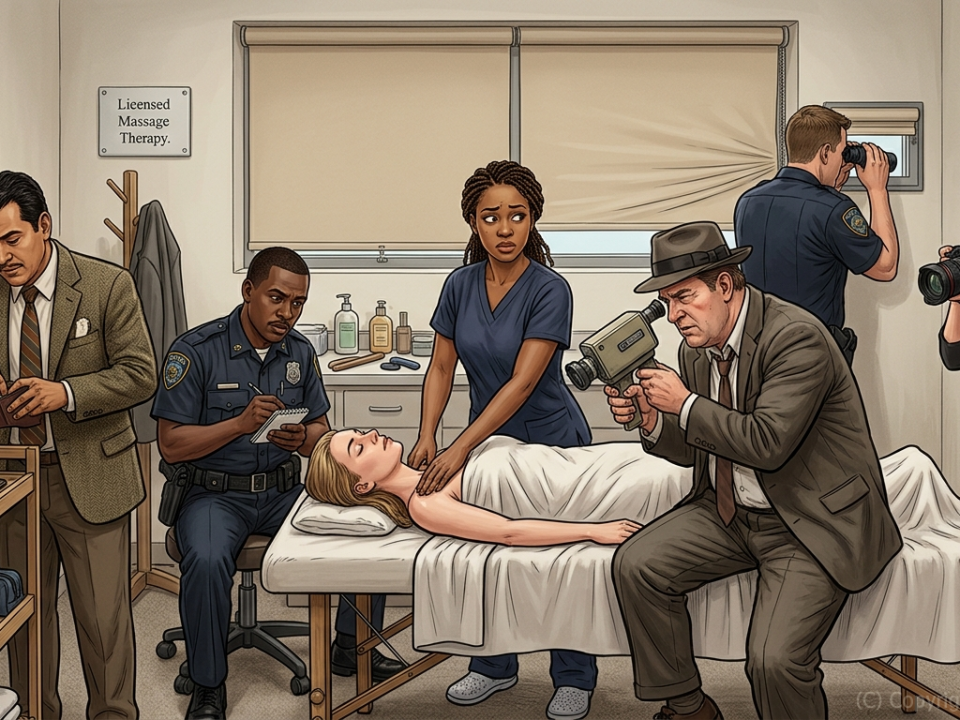
The human skin is not merely a biological envelope; it is the body’s largest sensory organ and a primary interface for neurological, immunological, and psychological homeostasis. Throughout human history, the application of “structured touch” has been recognized as a foundational healing modality. However, in the State of New Jersey, the legislative evolution of the past two decades has effected a systematic “colonization” of this somatic space. By redefining the universal act of human touch through the lens of “Police Power” and “Bad Actor” surveillance, the state has effectively traded a respected medical modality for a regulatory weapon, resulting in a profound infantilization of the Licensed Massage Therapist (LMT) and a disruption of parental and patient autonomy.
This has roots in bias against women, as well as members of the lower socioeconomic strata. And, those are the primary groups affected adversely by these rules, as well.
I. The Biological Necessity and Clinical Legitimacy of Touch
To understand the gravity of regulatory overreach, one must first acknowledge the empirical necessity of touch. Clinical research has consistently demonstrated that human touch is a biological imperative. Studies on “Touch Deprivation” (Field, 2010) indicate that a lack of tactile stimulation leads to increased cortisol levels, weakened immune response, and heightened anxiety. Conversely, the “structured touch” employed by LMTs triggers a cascade of beneficial biochemical reactions, including the release of oxytocin and the modulation of the parasympathetic nervous system.
In a functional medical model, the LMT operates as an expert in Somatic Assessment. This is not merely “relaxation”; it is a clinical process involving the evaluation of soft tissue integrity, range of motion, and myofascial triggers. A professional LMT generates clinical notes and assessments that are increasingly recognized by insurance carriers and interdisciplinary medical teams as essential data points for patient recovery. Despite this, the legislative framework in New Jersey treats the LMT not as a primary care partner, but as a potential liability to be mitigated.
II. The 2007 Act: From Professional Standard to Surveillance Tool
The transition from the 1999 Title Protection Act (P.L. 1999, c. 19) to the Massage and Bodywork Therapist Registration Act of 2007 (P.L. 2007, c. 337) marked a tectonic shift in the State’s logic. Under the original 1999 law, the State protected the title of the professional. The 2007 Act, however, transitioned to a Practice Act, which claimed jurisdiction over the act itself.
By defining “massage and bodywork therapy” as any “systems of activity of structured touch” (N.J.S.A. 45:11-55), the State effectively nationalized the human shoulder. The intent behind this broad definition was not to refine the clinical standards of the modality, but to simplify “Police Power.” By making the physical act of touching a licensed event, law enforcement gained a “deterministic hook” to shut down illicit storefronts without having to prove specific criminal intent.
Critically, the statutory inclusion of “static holding” within the definition of massage therapy serves as the ultimate regulatory dragnet. By codifying “static holding” as a professional medical act, the State ensures that any touch—no matter how stationary, non-mechanical, or energetic—is captured under its jurisdiction. This effectively eliminates the “Human Exception.” In the eyes of the Board, there is no such thing as a non-clinical touch in a professional setting; a hand resting motionless on a shoulder is legally indistinguishable from a complex myofascial release, thereby completing the State’s total colonization of the somatic space.
III. The Custodial Cage: The Infantilization of Pediatric Care
The most egregious manifestation of this distrust is found in N.J.A.C. 13:37A-3.6(h), which mandates that a licensee shall not provide services to a minor unless a parent or legal guardian is physically present in the treatment room.
This regulation creates a profound “Professional Double Standard.” Occupational Therapists (OTs) and Physical Therapists (PTs) are trusted to exercise clinical judgment and maintain professional boundaries with pediatric clients without a mandated chaperone. The LMT, however, is infantilized—treated as a professional incapable of being trusted in a private clinical setting. This mandate creates several critical “Friction Points” in modern pediatric care:
- The Hospice and Home Health Barrier: Children in palliative care or receiving home-based therapy for chronic conditions are often denied access to the benefits of touch if a parent is unable to be physically present. Even if a certified Home Health Aide or a trusted relative is on-site, the LMT is legally paralyzed.
- The “Working Parent” Tax: The “Parent-in-the-Room” mandate is not a neutral safety rule; it is a socio-economic barrier. For working-class families, single parents, or those living in “Touch Deserts,” this mandate acts as a regressive tax. If a parent must choose between working a shift to provide for the family and attending a child’s therapeutic session, the child inevitably loses access to care.
- The Digital Transparency Paradox: In many modern clinical settings, parents prefer the “Deterministic Safety” of high-definition camera monitoring. This allows the child to develop a sense of personal agency and privacy during therapy while providing the parent with complete oversight. The NJ Board’s rejection of this alternative highlights that the law is not about modern safety, but about archaic physical surveillance.
IV. The Anatomical Paradox and the Maternal Health Gap
The infantilization of the LMT is further visible in the arbitrary “Anatomical Walls” erected by the State, which ignore clinical indications in favor of moralistic profiling. While New Jersey law allows for the evolution of a practitioner’s skill set through new modalities, it maintains a nonsensical restriction on intravaginal massage.
Under current regulations, an LMT is trusted to perform intraoral work for TMJ dysfunction, intranasal work, and even intra-anal clinical applications (such as coccyx alignment or pelvic floor release). However, intravaginal work remains strictly prohibited. This creates a devastating gap in Postpartum Therapy. For a postnatal patient suffering from scar tissue adhesions or birth-related trauma, the LMT—the professional most trained in soft-tissue mobilization—is legally barred from providing the most effective manual intervention. The State trusts the LMT to navigate the cranium and the rectum but withdraws that trust at the vaginal vestibule, prioritizing “moral optics” over maternal clinical necessity.
V. The Marital Policing Trap: The Codification of Spousal Intimacy
The most extreme example of the 2007 Act’s “Police Power” overreach is found in the historical and current attempts to regulate the private, consensual lives of practitioners. In the September 4, 2012, Supplement of the N.J.A.C. 13:37A, the Board revealed a logic so invasive that it effectively placed the State as a chaperone in the marital bedroom. While this language has since been redacted, it served to further support the thesis presented here.
The State attempted to quantify the legitimacy of human affection through a chronological lens, defining a “long-term committed relationship” by a specific marker:
“For purposes of this definition, a long-term committed relationship means a relationship that is at least six months in duration.” (N.J.A.C. 13:37A-3.5, Supp. 9-4-12)
This “Six-Month Rule” meant a therapist in a committed relationship of five months was technically in violation of sexual misconduct statutes if they provided therapeutic touch followed by intimacy. Furthermore, the “Spousal Exception” in N.J.A.C. 13:37A-3.5(j) contained a clause that infantilized the very nature of marriage:
“Nothing in this section shall be construed to prevent a licensee from rendering massage or bodywork therapy to a spouse, providing that… the performance of therapy is not utilized to exploit the spouse for the sexual arousal or sexual gratification of the licensee.”
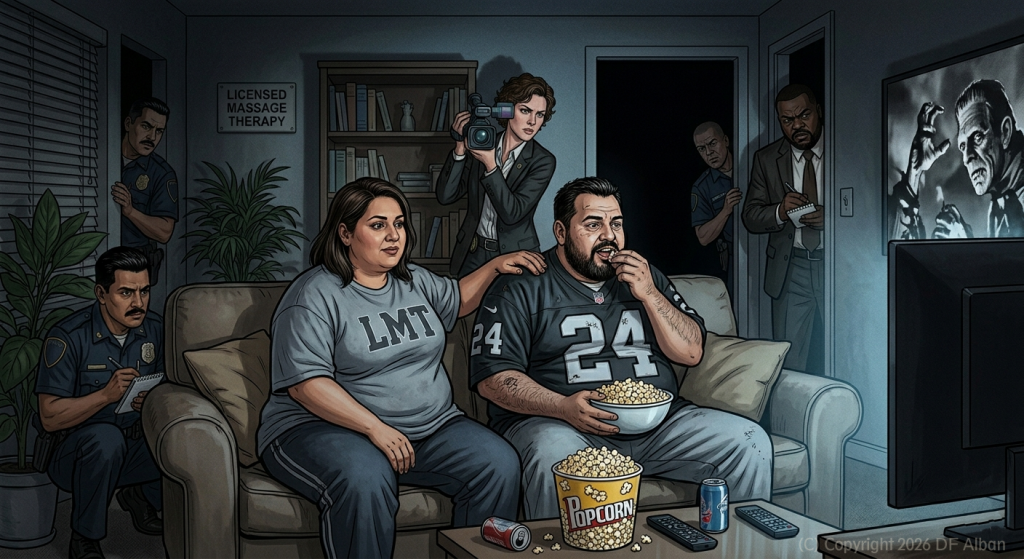
This creates a Clinical Audit of the Marital Bed. It suggests that if an LMT feels a natural attraction to their spouse during a moment of physical care, they are “exploiting” that spouse. It criminalizes the natural biological response between committed adults and turns the private bedroom into a potential site of regulatory investigation.
VI. The Clinical Audit of the Marital Bed: Regulating the “Standards” of Intimacy
The most invasive “Deterministic Logic Gate” ever constructed by the New Jersey State Board is codified in the specific language of N.J.A.C. 13:37A-3.5(j). While the clause is framed as an “exception” that allows a licensee to touch their spouse, the conditions attached to that exception represent a profound “Micro-Colonization” of private life. The State mandates that such touch is only legal if:
“…the rendering of such massage or bodywork therapy is consistent with accepted standards of massage or bodywork therapy and that the performance of therapy is not utilized to exploit the spouse for the sexual arousal or sexual gratification of the licensee.”
This language is “sick” precisely because it attempts to sanitize and clinicalize the biological reality of human marriage. It creates a three-fold pathology of state overreach:
- The De-Humanization of Spousal Connection: By requiring that a backrub given to a husband or wife be “consistent with accepted standards,” the State essentially outlaws the “Human Touch.” It demands that a wife massaging her husband must maintain the same clinical distance, draping standards, and technical protocols as if she were treating a stranger in a clinic. It strips the gesture of its spontaneity and replaces it with a State-Mandated Procedure.
- The “Exploitation” Paradox: The clause regarding “sexual arousal or gratification” is an unprecedented intrusion into the neurobiology of a committed relationship. It suggests that if an LMT feels a natural, healthy attraction to their spouse during a moment of physical care, they are “exploiting” that spouse. This “Vice-Based Logic” treats the LMT’s own sexuality as a professional hazard that must be suppressed even in the presence of their legal partner. It is a “State-Sponsorship of Distrust” that reaches into the very hormones and nervous systems of the practitioners.
- The Impossible Audit: From a legal standpoint, this clause is a “Ghost Regulation.” How does the State intend to verify if a private, spousal massage was “consistent with accepted standards”? Does the Board intend to send inspectors into the home? Does it expect a spouse to testify against their partner regarding the “intent” of a shoulder rub? By writing an unenforceable rule that governs the most private of human acts, the State reveals that its goal is not “Safety,” but Total Surveillance. It is an attempt to ensure that the LMT never truly “owns” their hands, even when they are used to comfort their own family.
This final pillar of evidence proves that the 2007 Act did not just “protect the public”; it attempted to re-program the professional. It demands that the LMT see the world through the State’s eyes—where every touch is a potential crime, every patient is a potential “Bad Actor,” and even a spouse is a “Subject” to be managed according to the N.J.A.C.
Conclusion: Implications of a Policing Model in Healthcare
The cumulative evidence—from the Colonization of Human Touch in 2007 to the Six-Month Probation on Love in 2012—reveals a legislative framework built entirely on the “DNA of Distrust.” By trading the “Human Modality” for a “Regulatory Weapon,” the State of New Jersey has created a system where the LMT is perpetually treated as a “Bad Actor” in a state of pre-crime.
To restore the integrity of the profession, the “Scaffold” of police-centric regulation must be dismantled. We must demand a return to a model that respects Clinical Autonomy, Parental Rights, and the Biological Sanctity of human touch. Until the law acknowledges that an LMT is a trusted professional capable of managing a treatment room—and a private life—without a state-mandated stopwatch or chaperone, it will remain a flawed instrument of surveillance rather than a standard of care.
This article is academically and legally defensible; here is the formal citation list of the statutes and administrative codes referenced. These citations track the evolution from the initial 1999 Title Protection to the invasive 2012 “Spousal Exception” language.
Commentary: The Socioeconomic “Vice-Tax” on Professionalism
The legal framework of the 2007 Act and the subsequent 2012 regulatory supplements do more than just regulate a trade; they enforce a Class-Based Stigma.
By framing the Licensed Massage Therapist through a lens of “Police Power” and “Deterministic Surveillance,” the State of New Jersey imposes a reputational and economic “Vice-Tax” on a profession that is already fighting for clinical respect.
As many LMTs hail from lower socioeconomic strata, and over 4 in 5 LMTs are also women, this can easily said to be an institutional bias against women, as well as people lacking wealth. This is classsist, plain and simple.
The “Quasi-Prostitute” Frame
Despite the requirement of hundreds of hours of clinical education, national examinations, and rigorous licensing, the N.J.A.C. continues to treat the treatment room as a potential crime scene. When the State mandates “chaperones” for pediatric clients and “intent-audits” for marital intimacy, it signals to the public that the LMT is a “quasi-illicit” actor in a state of pre-crime. This creates a “Reputational Ceiling” that prevents the LMT from being seen as a clinical peer to Physical or Occupational Therapists, who are granted the professional trust to work privately with patients.
The Economic Barrier to Care This distrust has a direct socioeconomic impact on both the practitioner and the patient.
-
For the Professional: An LMT focusing on pediatrics or postpartum care cannot compete with the OTs and PTs who do not have rules governing when, where, and how they can deliver proven medical care to kids and women. There is a higher barrier to entry for LMT than the lowered return on this educational investment for LMTs working with these populations.
-
For the Patient: The “Parent-in-the-Room” mandate acts as a regressive tax on working-class families. A single parent who cannot afford to miss an hour of work is effectively barred from seeking non-pharmacological pain management for their child because Grandma or a 23-year-old sibling, or other trusted adult relative, can’t be present. In this way, the State’s “Safety” rules create “Care Deserts” for low-income populations.
The DNA of Distrust Ultimately, these “sick” and “puerile” regulations rely on the fact that many LMTs come from lower socioeconomic backgrounds and may lack the legal or political capital to challenge the Board’s overreach. This investigation into the “Archaeology of the Code” is a necessary act of De-Colonization. To change the socioeconomic status of the LMT, we must first dismantle the legal framework that insists on treating the healer as a suspect. We must move the modality from the shadow of the “Vice Squad” and into the light of Evidence-Based Clinical Practice.
-
Class Stigma: Because many LMTs enter the field through post-secondary non-degree awards (vocational schools) rather than 4-year universities, the “Police Power” oversight we’re considering here often uses this SES status to justify invasive surveillance that wouldn’t be tolerated in “higher” medical fields like Physical Therapy.
-
The “Vice Law” Legacy: New Jersey’s specific history with “Massage Parlor” crackdowns in the late 20th century heavily influenced the 2007 Licensing Act, intentionally keeping the profession under a “suspicion-based” regulatory model rather than a “trust-based” medical model.
Table of Statutory and Regulatory Authorities
| Citation | Title/Description | Key Relevance to Article |
|---|---|---|
| N.J.S.A. 45:11-53 | Definitions; Massage and Bodywork | Defines the “Scope of Practice” and creates the “Static Scope” by distinguishing assessment from diagnosis. |
| N.J.S.A. 45:11-55 | License Required; Exceptions | The “Colonization” clause; defines massage as “structured touch” and “static holding,” bringing all touch under State power. |
| P.L. 1999, c. 19 | Massage and Bodywork Therapist Registration Act | The original 1999 Act that provided Title Protection without practice-act restrictions. |
| P.L. 2007, c. 337 | Massage and Bodywork Therapist Licensing Act | The 2007 transition to a Practice Act; the origin of the “Police Power” and “Bad Actor” surveillance model. |
| N.J.A.C. 13:37A-3.6(h) | Mandatory Parental Presence | The “Custodial Cage” clause; mandates physical presence of a parent/guardian in the room for minors. |
| N.J.A.C. 13:37A-3.5 | Sexual Misconduct Definitions | The primary site of the “Marital Trap”; defines “Sexual Contact” and “Client” in absolute terms. |
| N.J.A.C. 13:37A-3.5 (Supp. 9-4-12) | Historical Definition of Spouse | The “Six-Month Rule”; defined committed relationships as requiring a 180-day minimum duration. |
| N.J.A.C. 13:37A-3.5(j) | Spousal Exception Clause | The “Clinical Audit” clause; allows spousal massage only if it meets professional standards and lacks “arousal.” |
| 43 N.J.R. 2721(a) | Rule Proposal (Nov. 7, 2011) | The historical record where the Board first proposed the “Spousal Exception” in response to overreach. |
| 44 N.J.R. 2185(b) | Rule Adoption (Sept. 4, 2012) | The final adoption of the 2012 rules, codifying the “Six-Month” and “Exploitation” language. |
Secondary Clinical References
- Field, T. (2010). Touch. MIT Press. (Foundational study on “Skin Hunger” and the biological necessity of tactile stimulation for cortisol modulation).
- New Jersey State Library Digital Repository. Superseded Administrative Code, Title 13, Chapter 37/37A. (Source for the 2011–2013 historical iterations regarding spousal definitions).
